
Paintings Unfit for Vision
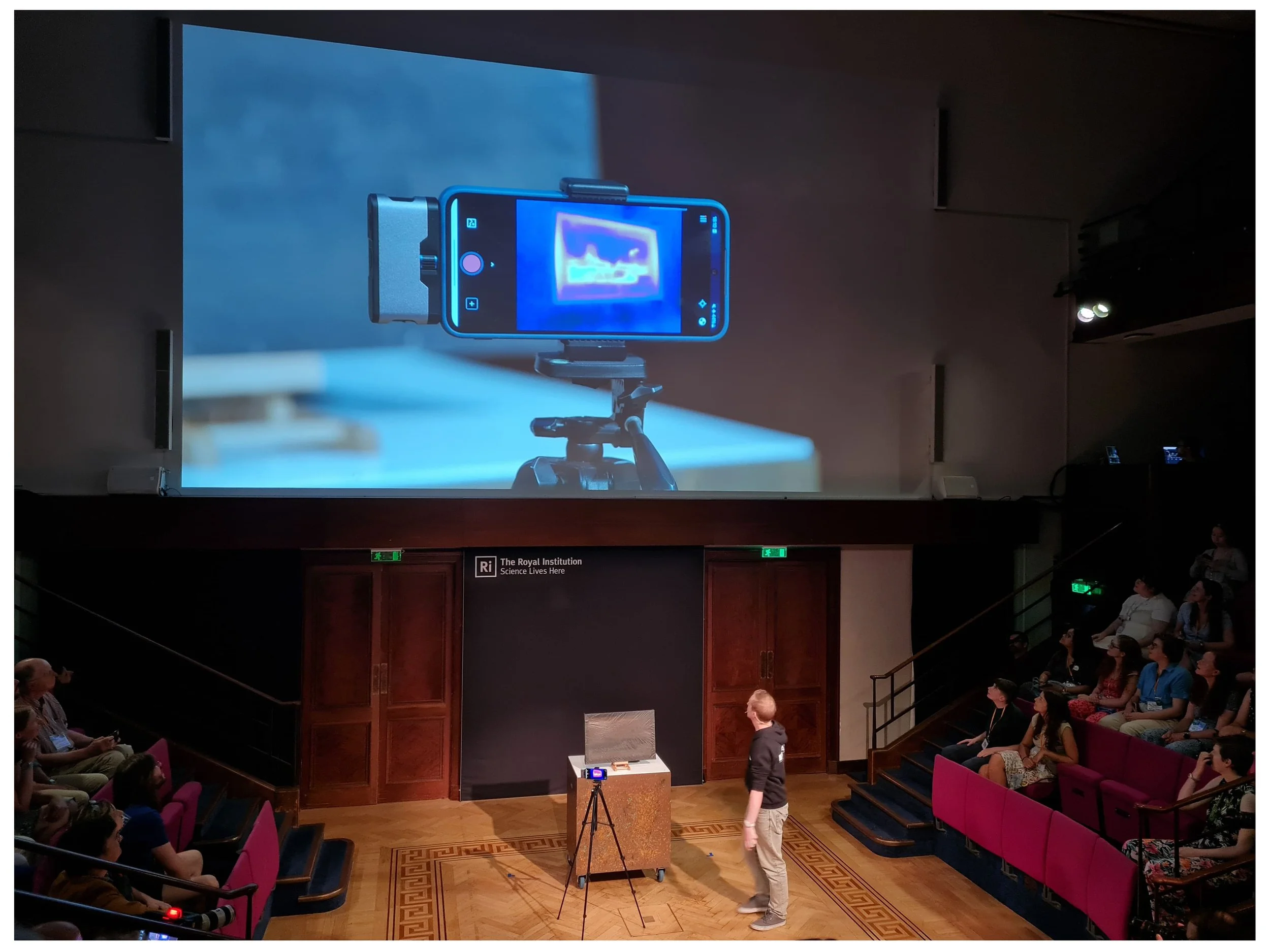
When William Herschel discovered infrared light in 1800 he poetically termed it: ‘Light unfit for vision’. Inspired by this, and modern infrared astronomy, I have begun creating images of imagined exoplanet landscapes that can only be viewed with thermal cameras. The first finished piece in this series, believed to be the world’s first infrared painting, was unveiled in the Faraday Lecture Theatre at the Royal Institution, London. On the same stage where colour photography was first demonstrated, in July 2025, so too was the first infrared painting.
The James Webb Space Telescope is beginning to discover new worlds using infrared light.
Now you can too…
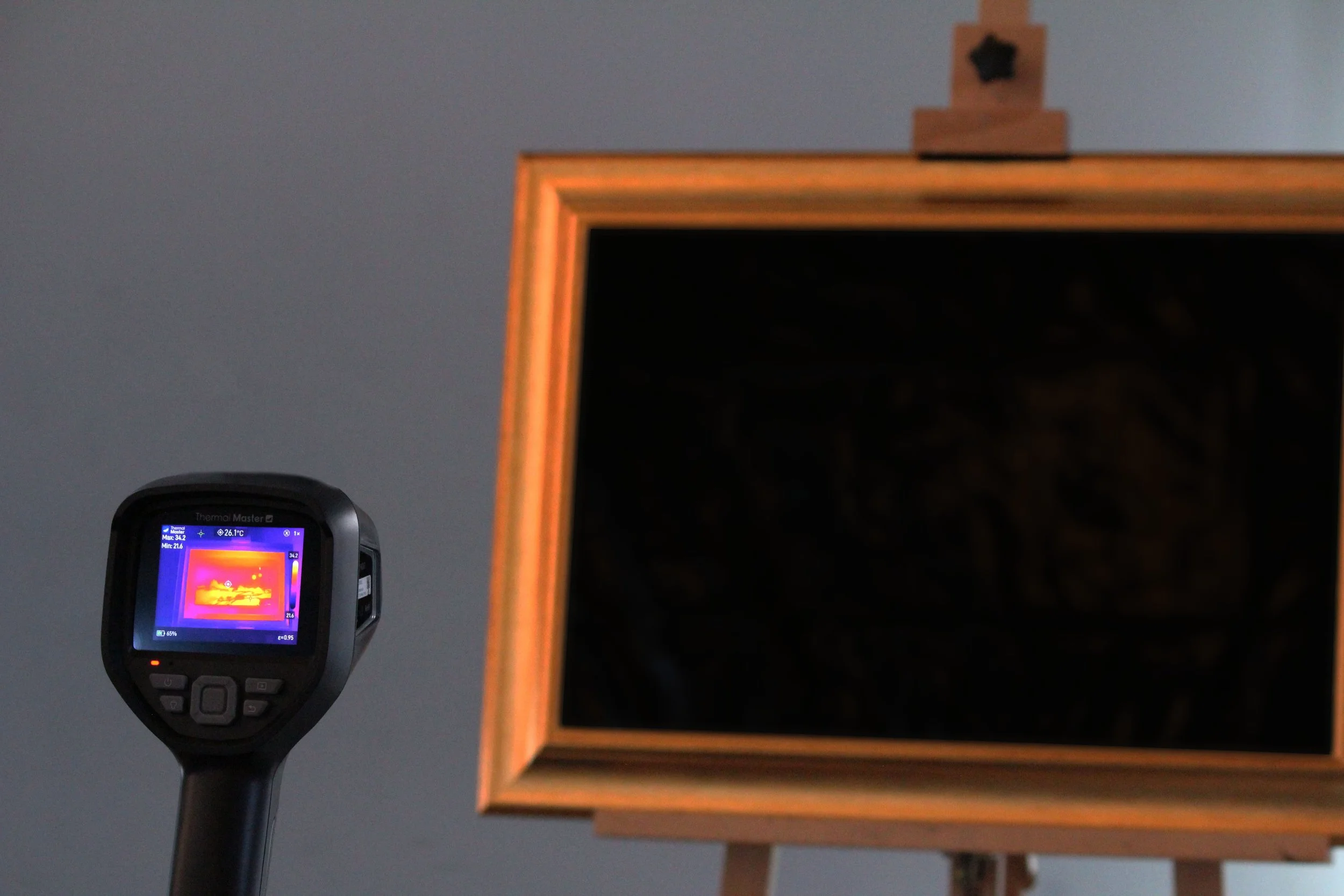
Exoplanet Landscape (Study 5) on display at Bristol Festival of Tech, Creativity and Culture in October 2025
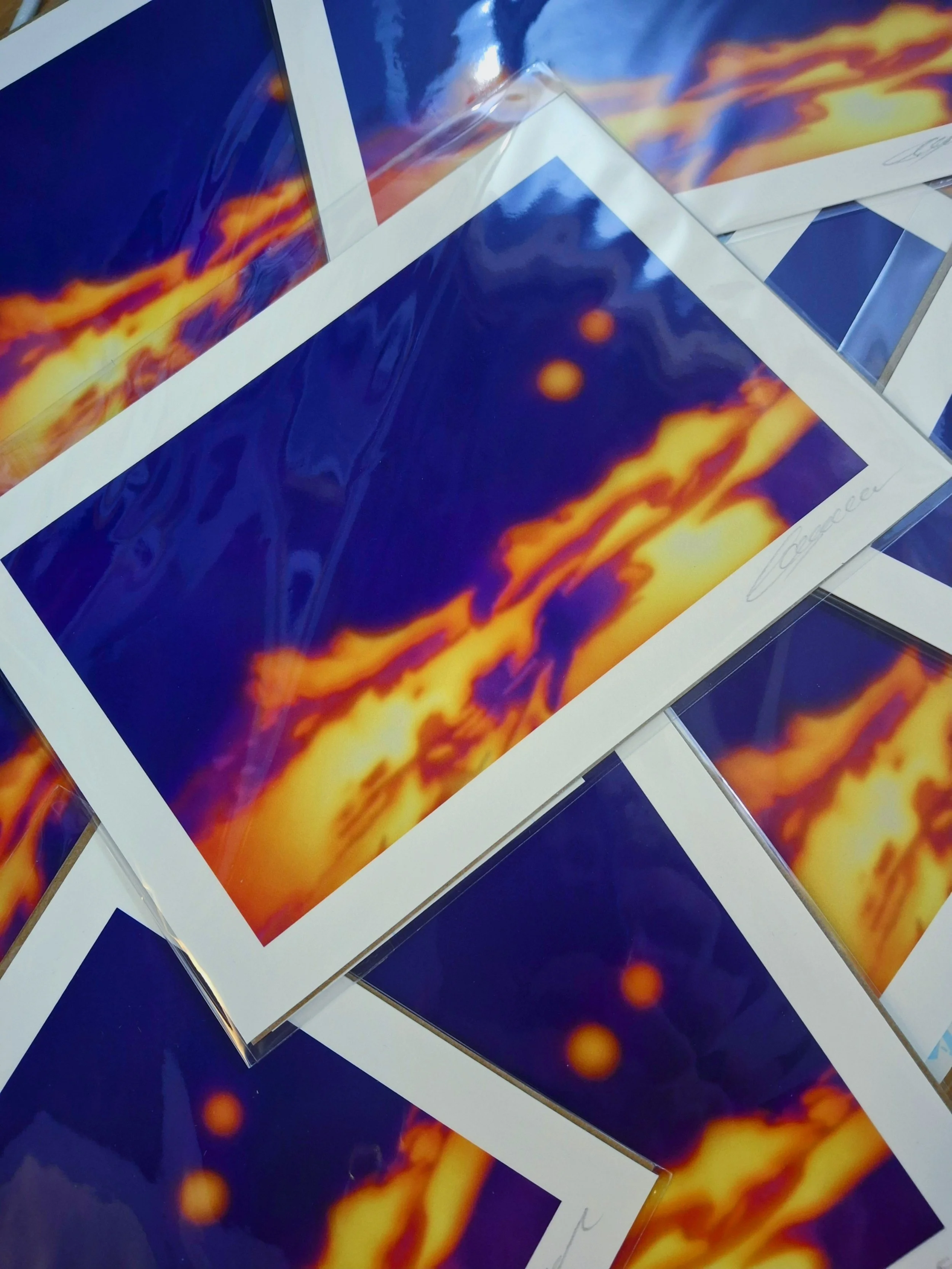
The sale of the prints and paintings from this series helps to support The MoSAIC’s bursary scheme helping to bring art-science to young people who have experienced disadvantage.
Exoplanet Landscape (Study 5)
The first successful image in this series was inspired by the binary star system Kepler 16 A/B. The original ink drawing shows an imaginary landscape of a rocky planet orbiting these two stars which was then translated into a painting that can only be viewed with thermal imaging.
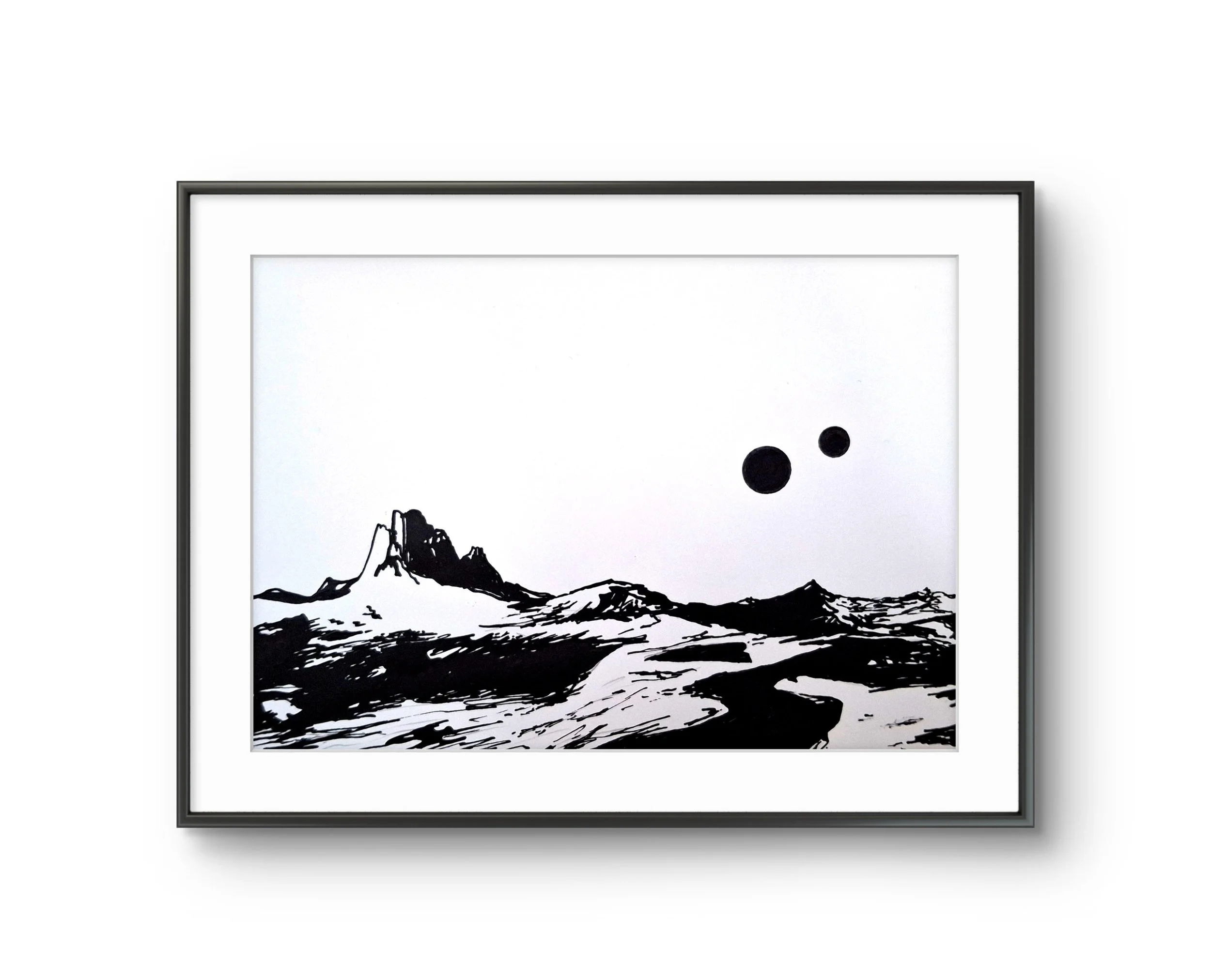
Original ink study for Exoplanet Landscape
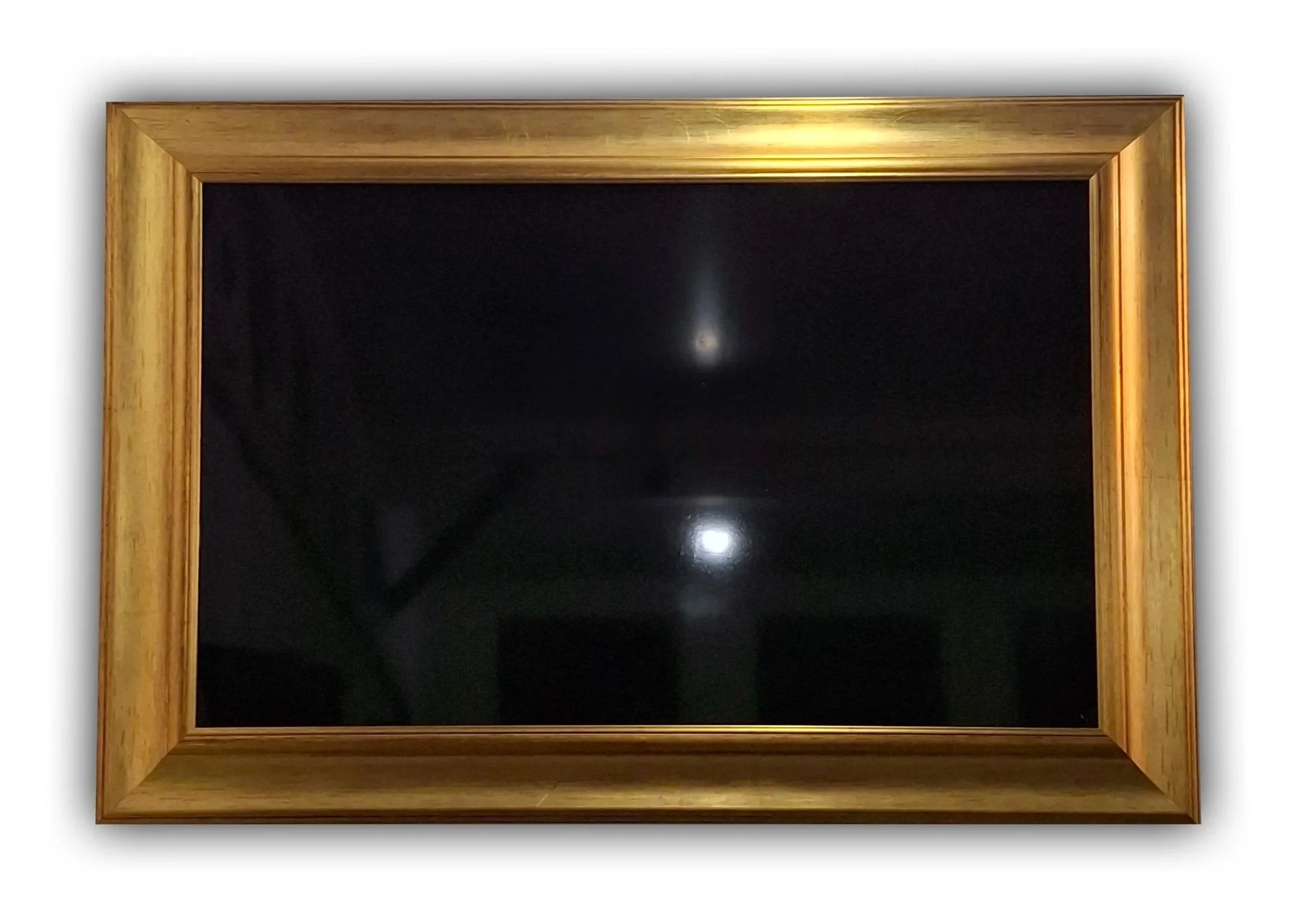
Exoplanet Landscape (Study 5) viewed in visible light
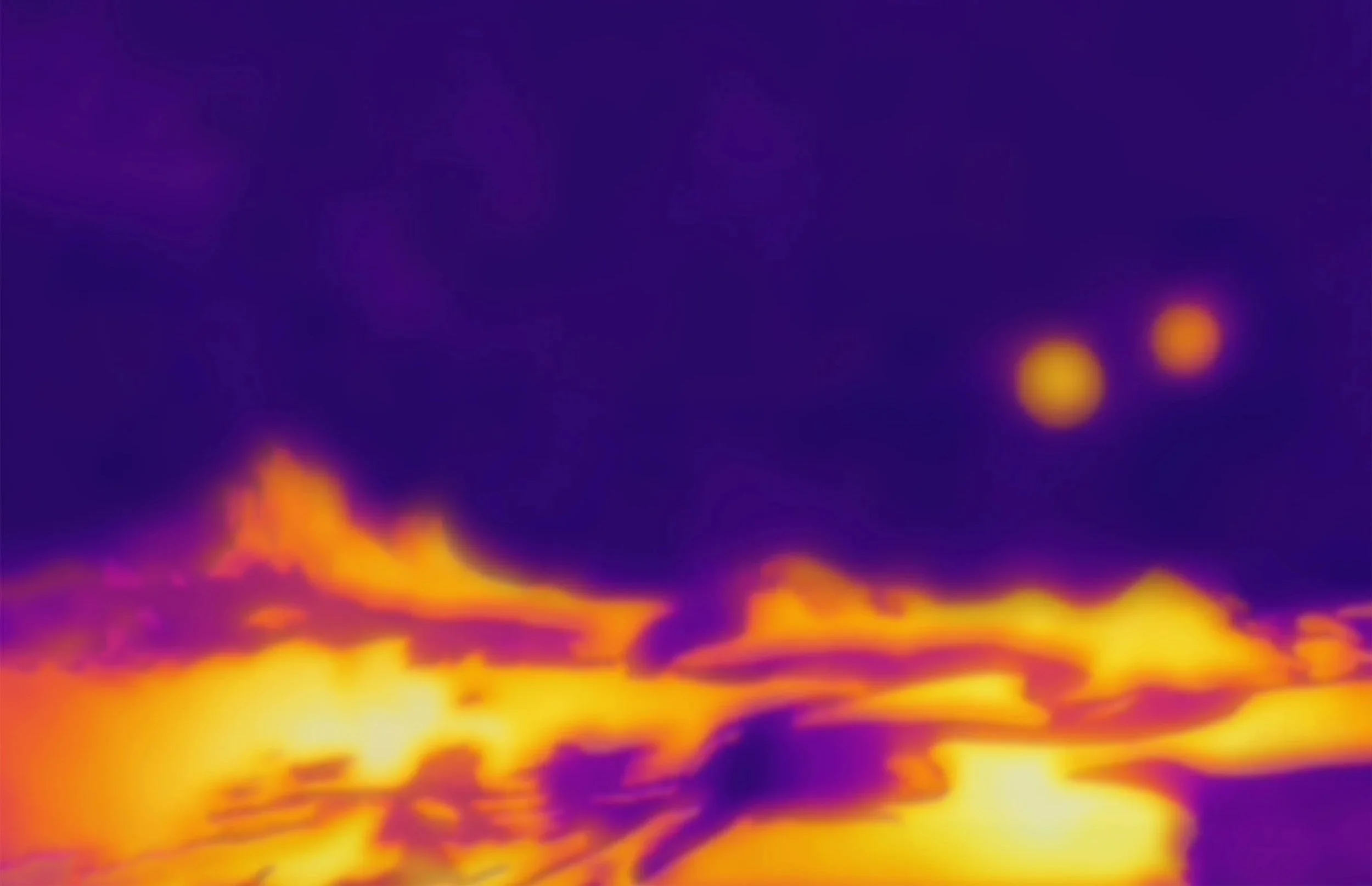
Thermograph of Exoplanet Landscape (Study 5)
The original ink study above is a quick sketch of an imagined landscape of a hypothetical moon of a known planet orbiting a binary star system. These stars are cooler than our Sun and therefore their peak radiation is infrared rather than visible light. This got me and my collaborator, Dr Sebastian von Hausegger, thinking… if intelligent life evolved here, their visual system would have evolved to see infrared. So what would their artworks look like?
After 3 months of experimentation this lead to the creation of the world’s first infrared painting, Exoplanet Landscape (Study 5). To humans, it appears completely black. The landscape can only be viewed by an infrared (thermal) camera as seen in the thermograph above.
These artworks exist at the intersection of painting, material science, and infrared imaging. My practice of infrared painting isn’t using infrared to view the artworks rather I am creating of physical paintings that contain compositions only fully visible when viewed through devices sensitive to far infrared. This isn’t reflected infrared that art forensics and infrared photography typically relies on.
The paintings are actually making light. Only it is light we can’t see.
Rather than using infrared as a post-capture photographic effect, I am utilising the different emissivity of materials, including paint, to create the images without any reliance on electronics.
These paintings have been displayed at:






In 1861, the world’s first colour photograph was unveiled at the Royal Institution, London.
In 2025 the world’s first infrared painting was unveiled on the same stage.
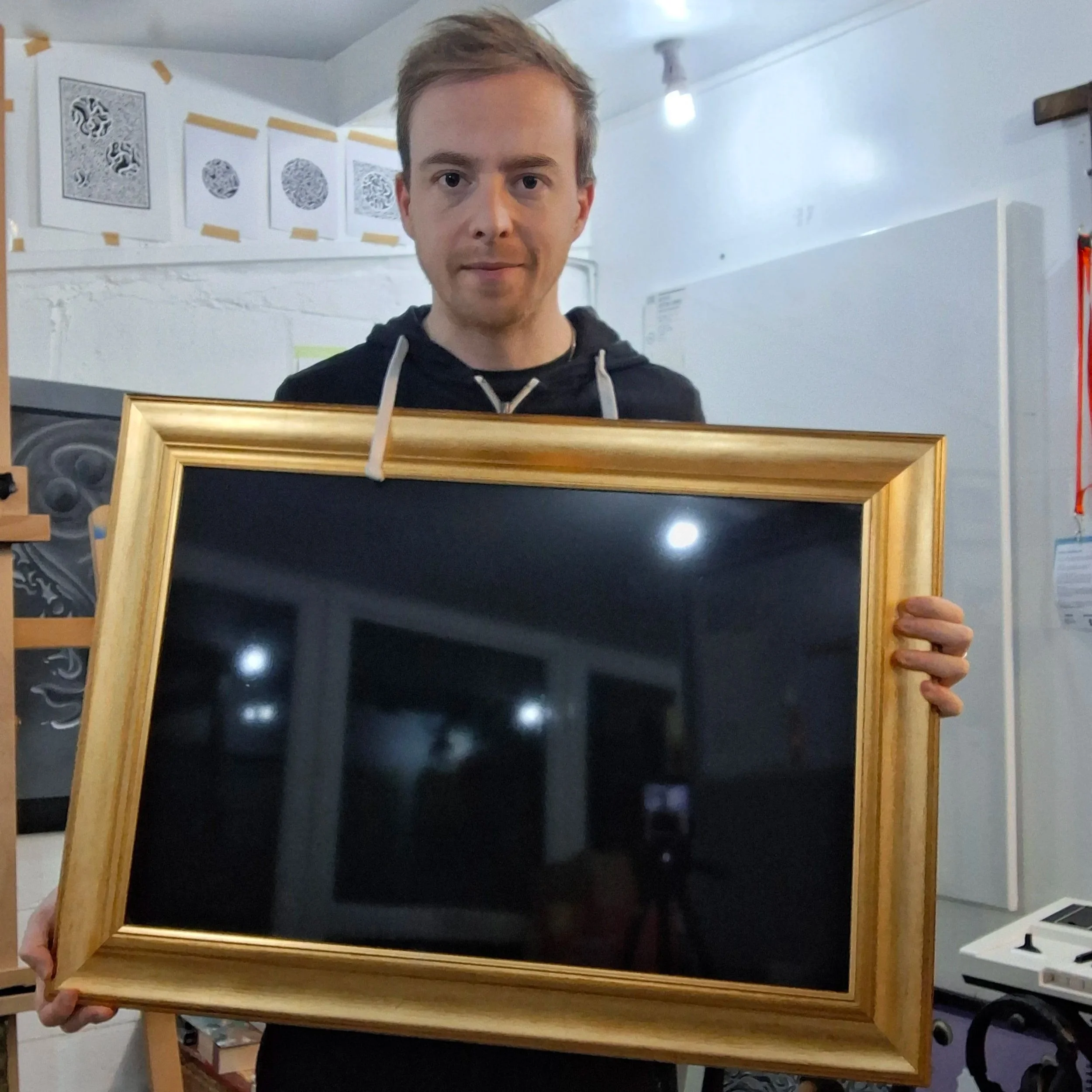
Exoplanet Landscape (Study 5) - as seen with visible light
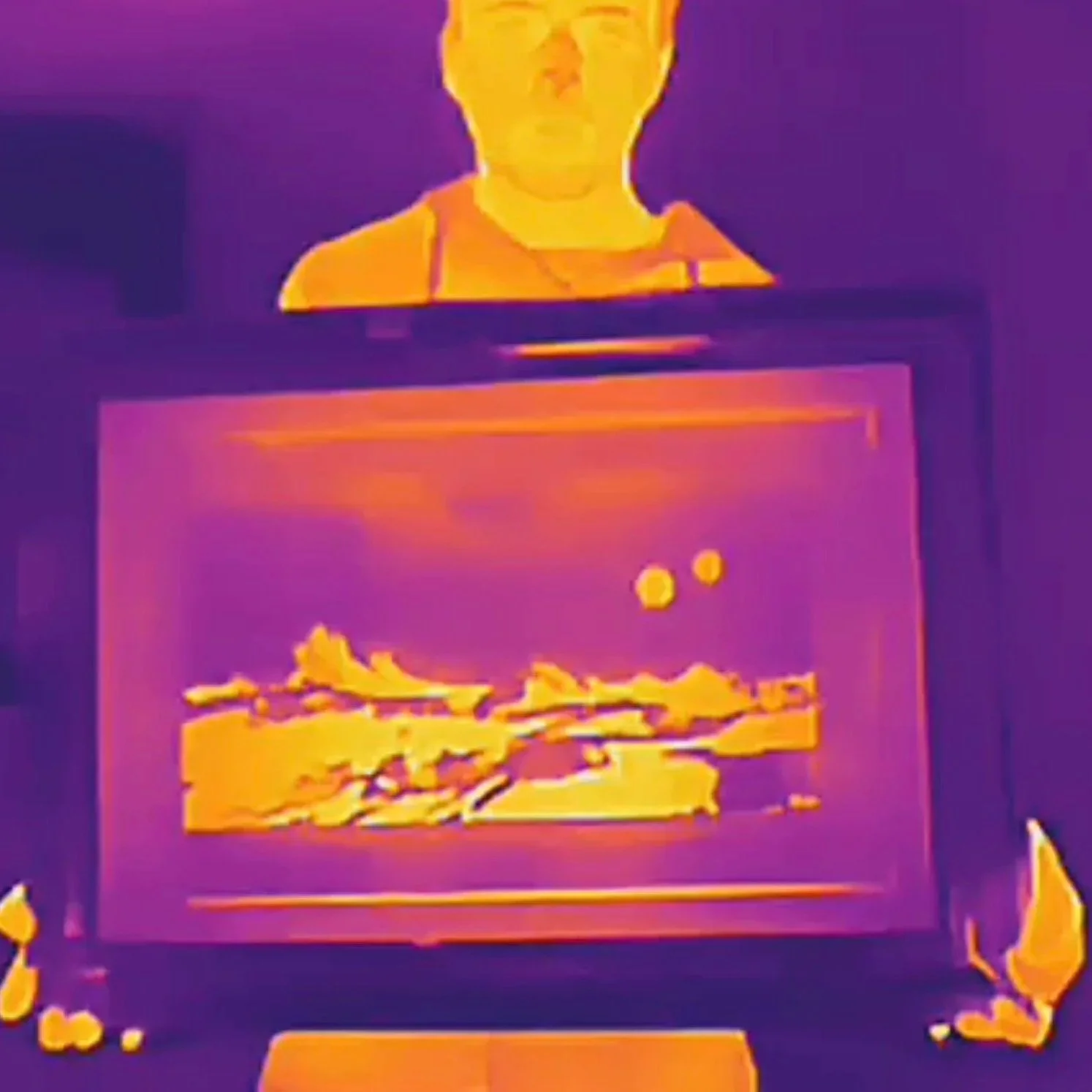
Exoplanet Landscape (Study 5) - as seen with a thermal camera (viewing emitted far-infrared light)

Artworks made using Thermal Master infrared cameras
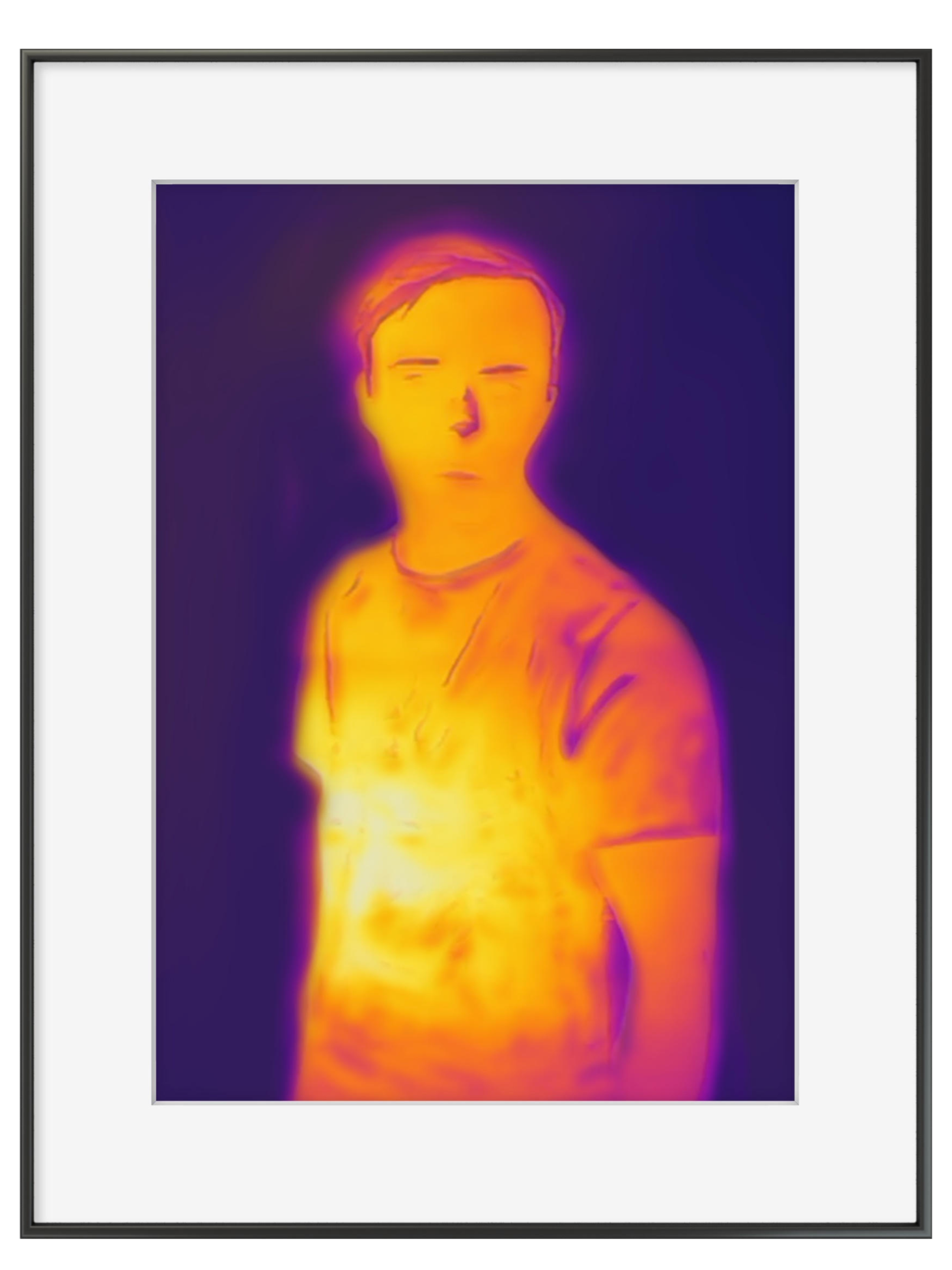
Self Portrait in a Darkened Room - thermographic print
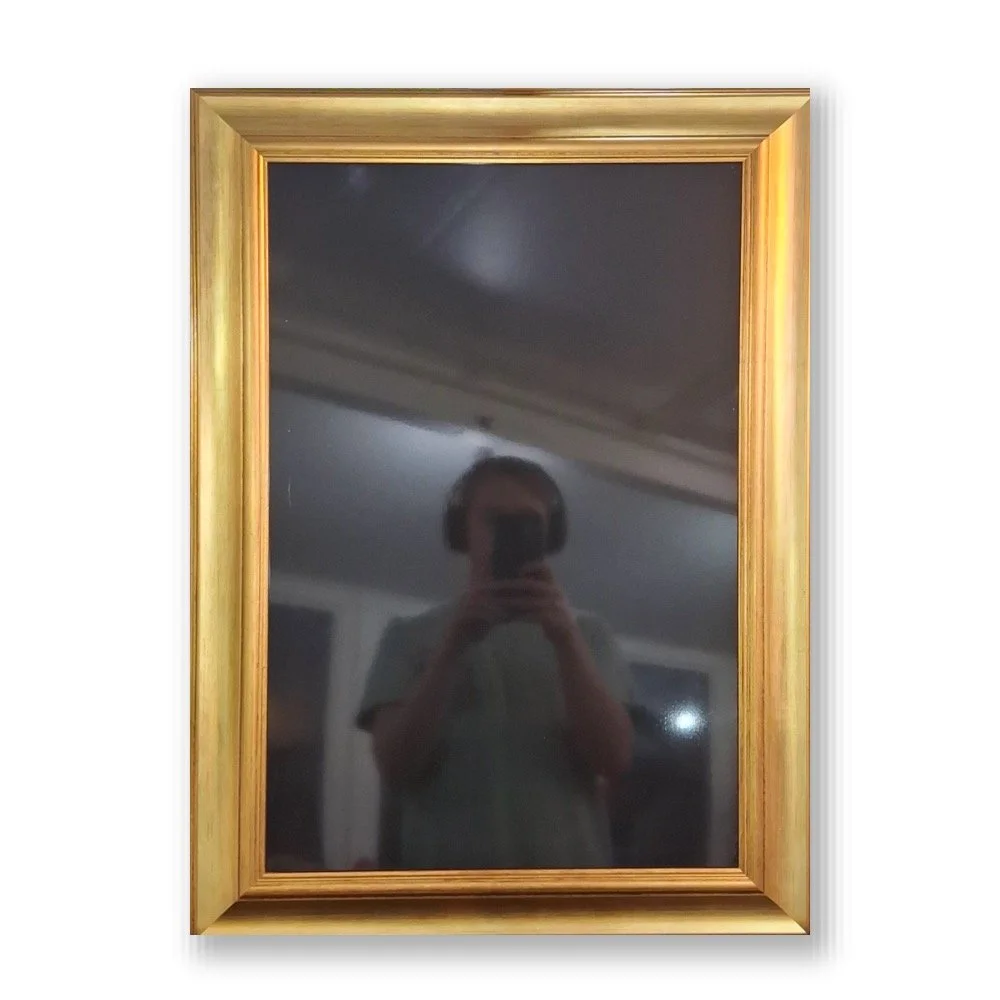
Self Portrait in a Darkened Room - as seen with visible light